
AI
AI.
Useful in the product. Useful in the work of making it.
Less brings design, product, frontend and AI capability to real tasks: the interaction people use, the workflow around it, and the system that helps a team build and maintain it.
See the workWhere it is showing up.
Platform processes
Less works with OpenAI on evolving their platform processes.
Ask about this work ↗
Merchant activation
Less explored an AI-assisted path through quotes, contracts and onboarding using product design and code prototypes.
See the prototype work ↗Merchant activation prototypeDesign the work around the model.
An AI-generated offer is useful when a sales person can understand it, change it and move the merchant forward. For DoorDash, Less prototyped the product experience around a generated quote: commercial terms, human review, signature and activation in one working flow.
The prototype makes the generated content, the human decision and the status of the deal visible together.
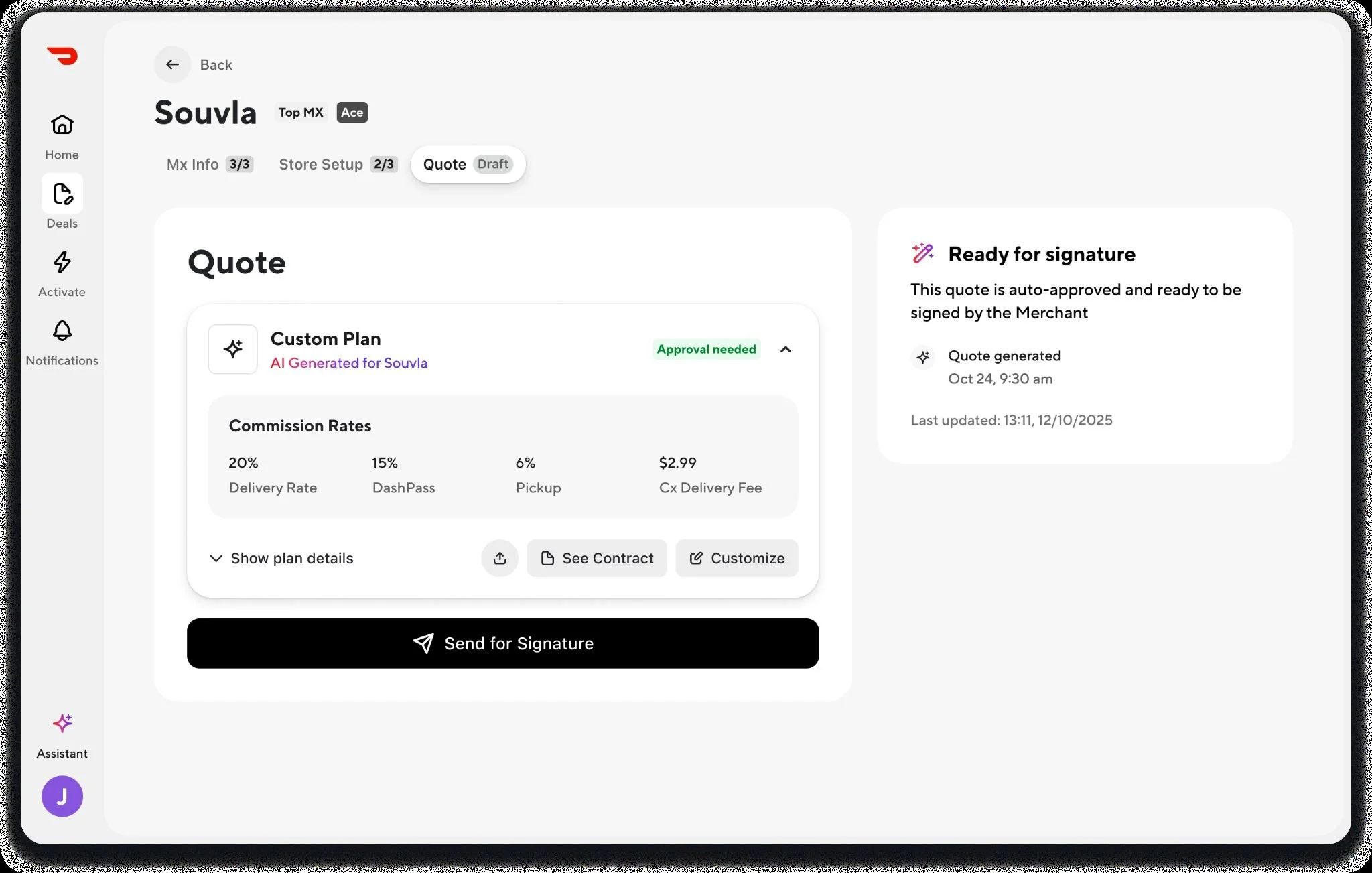
Make the generated offer inspectable.
The sales user sees the proposed plan and rates, opens the contract, adjusts the offer and decides when it is ready to send. The controls connect AI output to a real commercial decision.
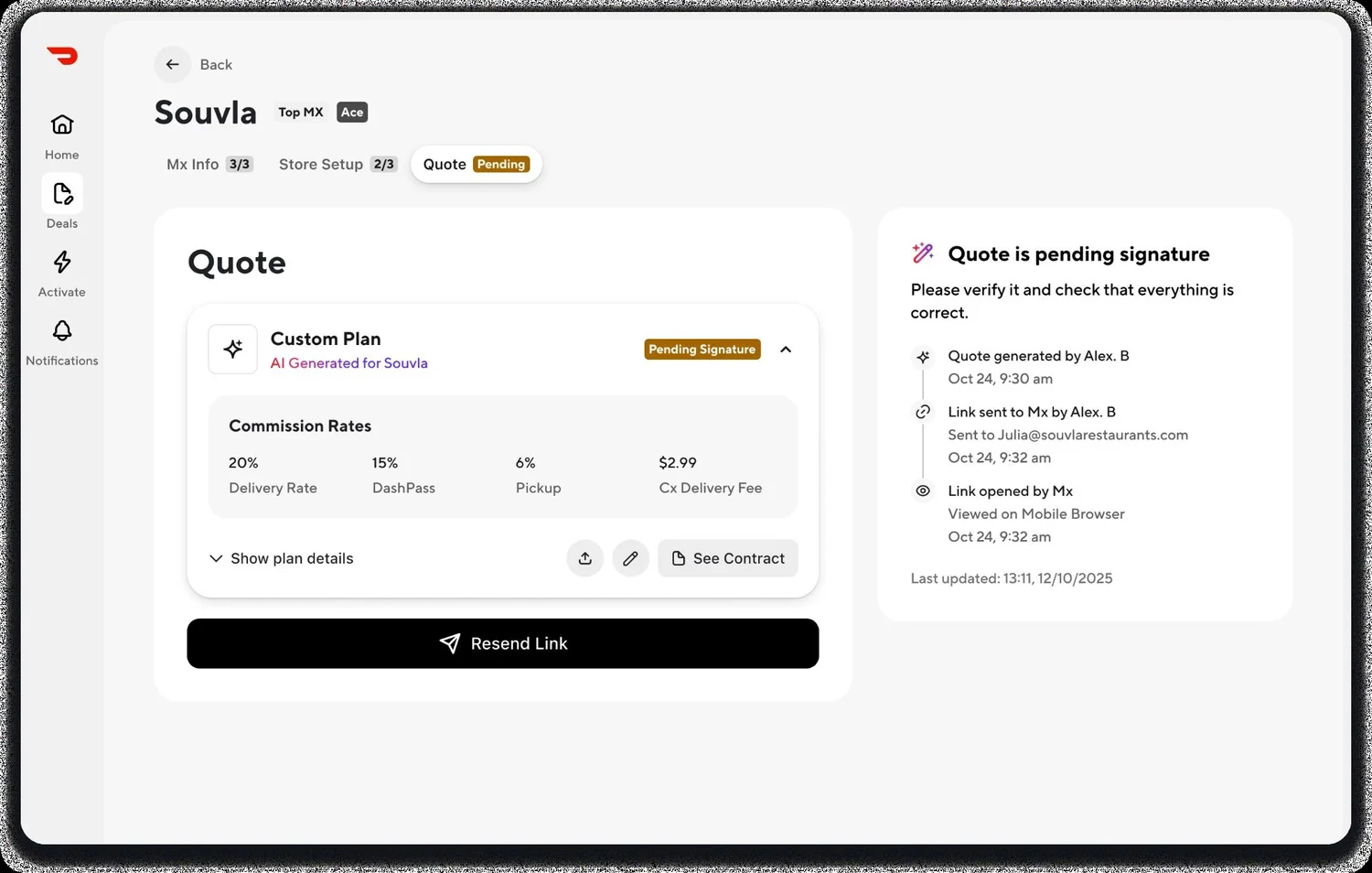
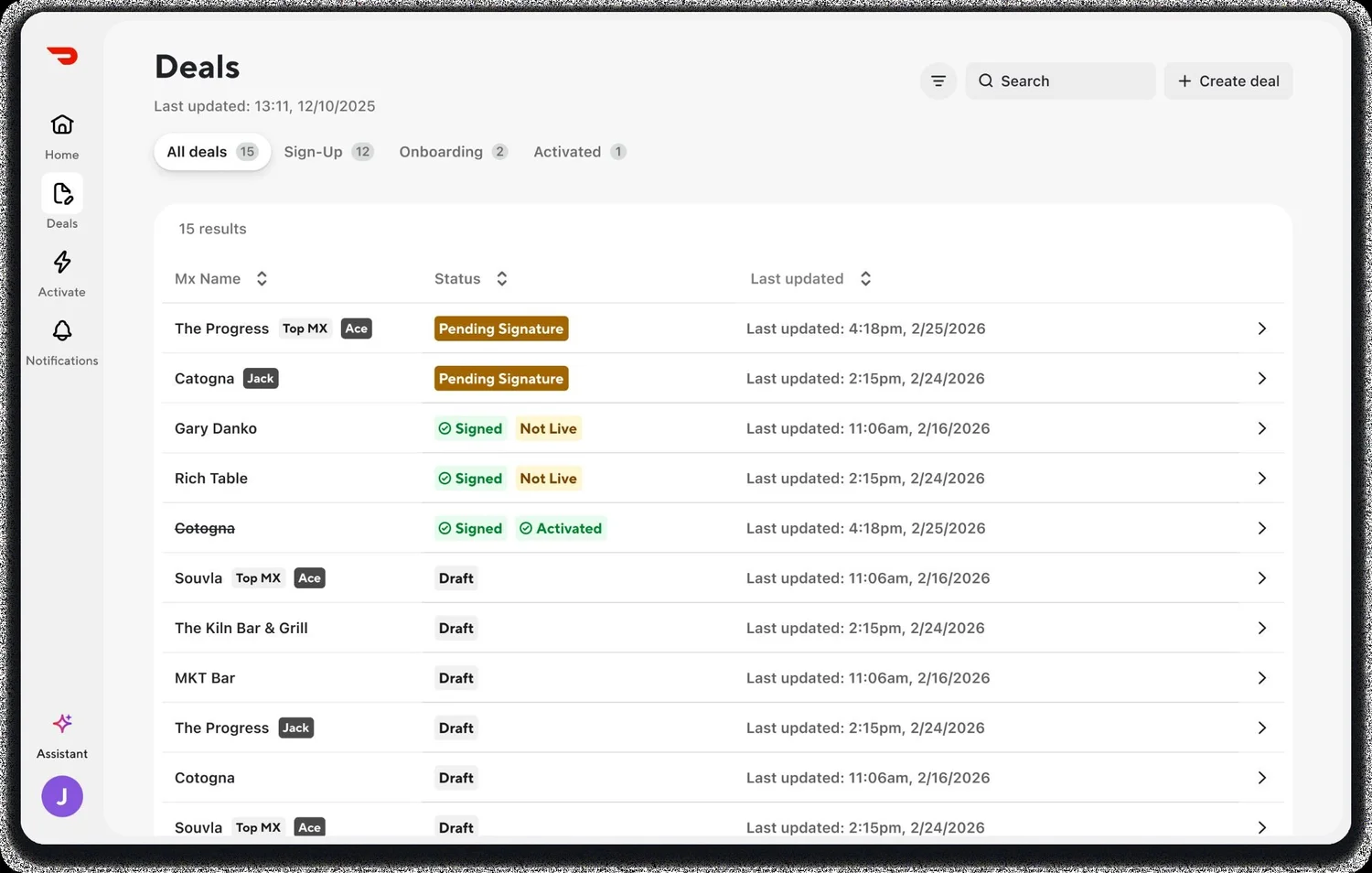
Selected screens from a working prototype. Want the decisions behind them?
Ask for a walkthroughFour kinds of practical work.
AI product design
Design the screens, controls and states around AI output: waiting, uncertainty, review, correction, approval and undo.
Human–AI workflows
Map the task across people, AI and existing systems. Define decision rights, handoffs, exceptions and recovery.
Design systems for AI-assisted development
Make Figma and code legible to each other through semantic tokens, component properties, naming, guidance and build tests.
See the design systems work ↗Code prototyping
Test real behavior before committing to a build: representative inputs, responses, approvals and failure paths.
What are you trying to make work?
Talk to LessMake AI work in the product—and in the way the product gets made.